
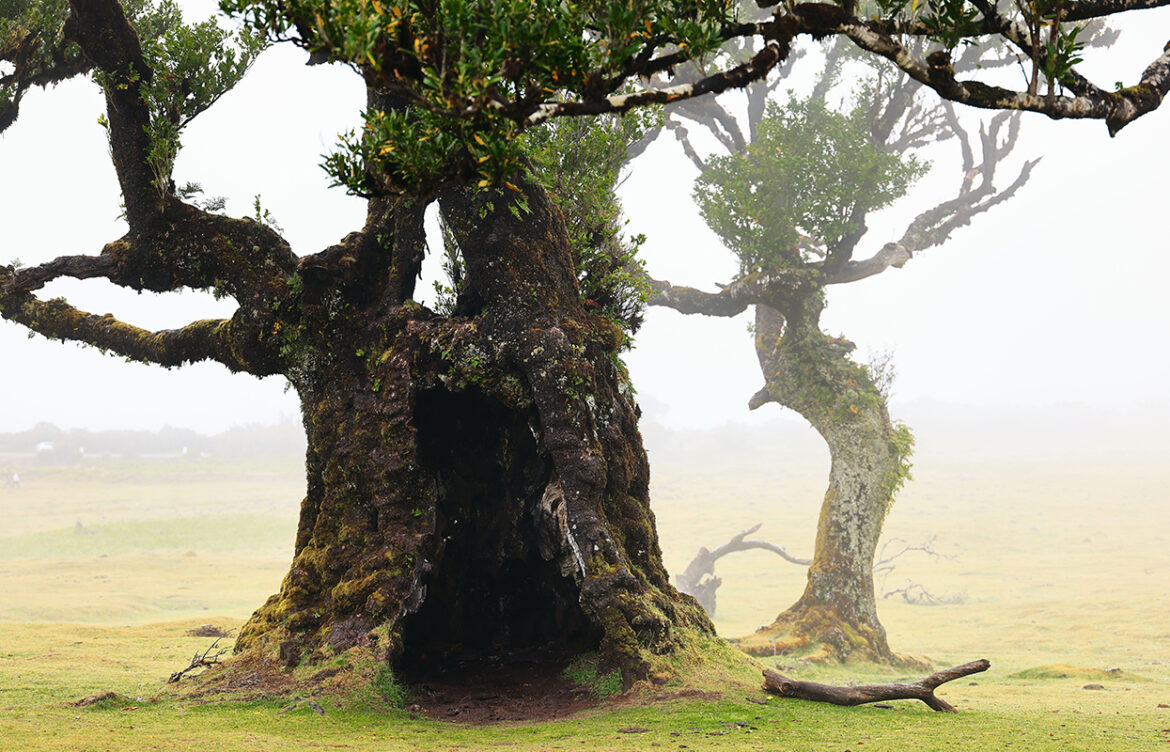
Gog and Magog
Tucked away in the quieter reaches of Glastonbury’s spiritual landscape are two ancient oaks named Gog and Magog. They are named after legendary biblical giants who lived many centuries ago. The trees are said to be aligned with other significant sites in Glastonbury, including Glastonbury Tor, Chalice Hill, the Abbey, and Wearyall Hill.
Collectively, this pair of ancient oaks is known as the “Oaks of Avalon,” as they are believed to have formed an ancient path to Avalon when the entire area was a marsh. The Oaks of Avalon have also been associated with a Druid avenue of oaks leading to the Tor. The trees were cut down around 1906 to make way for a farm. The Maker of Myths, published by Gothic Image Press, contains an interview with a man from the timber company that cut down the oaks. He said one oak had a circumference of 11 feet, and over 2,000 growth rings were counted in its trunk. To revive this ancient tradition, the Glastonbury Conservation Society recently planted a new avenue of oak trees.
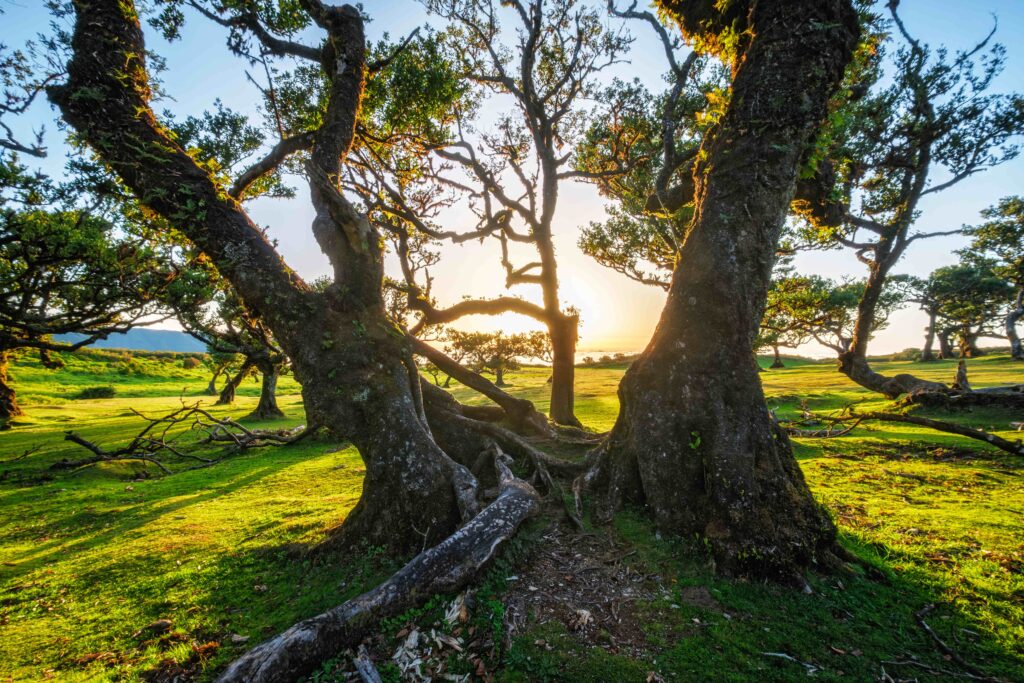 The two remaining oaks owe their name to a mythological tribe of giants. As it is told, upon the arrival of Brutus of Troy and his troops to Britain, he destroyed all the giants living in that country. However, two of them survived: Gog and Magog. They were brought to London as prisoners and put into chains in the royal palace located at the same site where London’s Guildhall now exists. These giants can be seen today in London in the shape of wooden statues at the Guildhall, where the Lord Mayor’s Banquet is held annually.
The oaks, for their part, have come to the end of an extremely lengthy existence. While Gog has passed away, he continues to exist as a standing skeleton. During the month of April 2017, another disaster struck him in the form of a candle that was left burning within his hollow trunk and caused him to catch fire.
Nonetheless, visiting them both seems like traveling through time and taking part in a pilgrimage into the ancient history of Glastonbury. They can be difficult to locate at times, and so it would be advisable to get a map showing directions from the Glastonbury Information Center located at St Dunstan’s House, Magdalene Street, Glastonbury.